There have now been two Sailing Grand Slam series (SGS) Regattas trialling World Sailing’s proposed Medal Format for the LA Olympics.
Intended to replace the format used since the Beijing Olympics in 2008 – a non-discardable, double-point Medal Race for the top 10 finishers. At the time considered revolutionary, it never achieved its purpose and has not spread outside the Olympic class events.
Even with the 2008 system it is possible to win the gold with a race to spare, or go into the final medal race with an almost unbeatable points lead and just having to complete a penalty free race.
Apparently the International Olympic Committee (IOC) is more interested in ensuring all its events pull their weight in terms of ticket sales and economic impact. And that includes even sailing, long considered a difficult audience attraction event.
They want a final race to decide the medal podium, with all the competitors in that race to have an equal chance of winning, with all the jeopardy that provides, just as it does for the running, swimming finals etc.
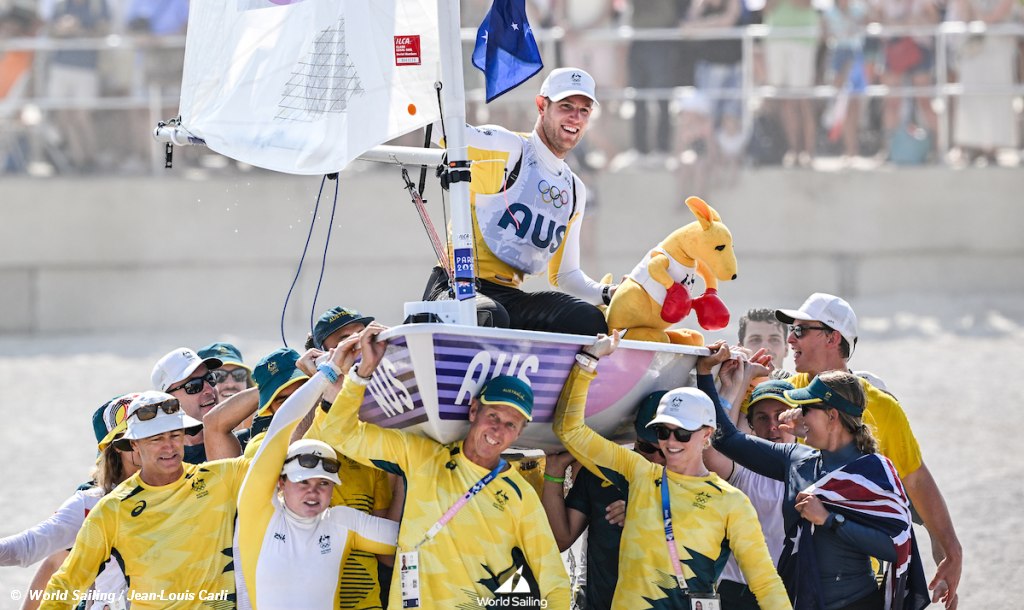
It is not clear how serious the IOC is in this sudden death requirement, or how keen World Sailing are to comply . . .
But looking at the process being trialled at the SGS events it is clear that World Sailing are sticking as close as possible to the status quo (or what since 2008 has been the norm for Olympic dinghies).
So, a classic stalemate. The IOC looking for a media friendly ‘first across the line’ podium result, and World Sailing fighting a rearguard action with a format that does the least to upset the existing medal format.
The six dinghy classes effected (the boards having settled on a classic knock-out series) have set themselves firmly against the ‘first across the line’ podium result, and agreed an adjusted-score medal series with a two race final.
This seems to go directly against IOC thinking, but perhaps World Sailing are confident that sailing as an original member of the Olympic family, is in a strong position to buck the trend of instant gratification.
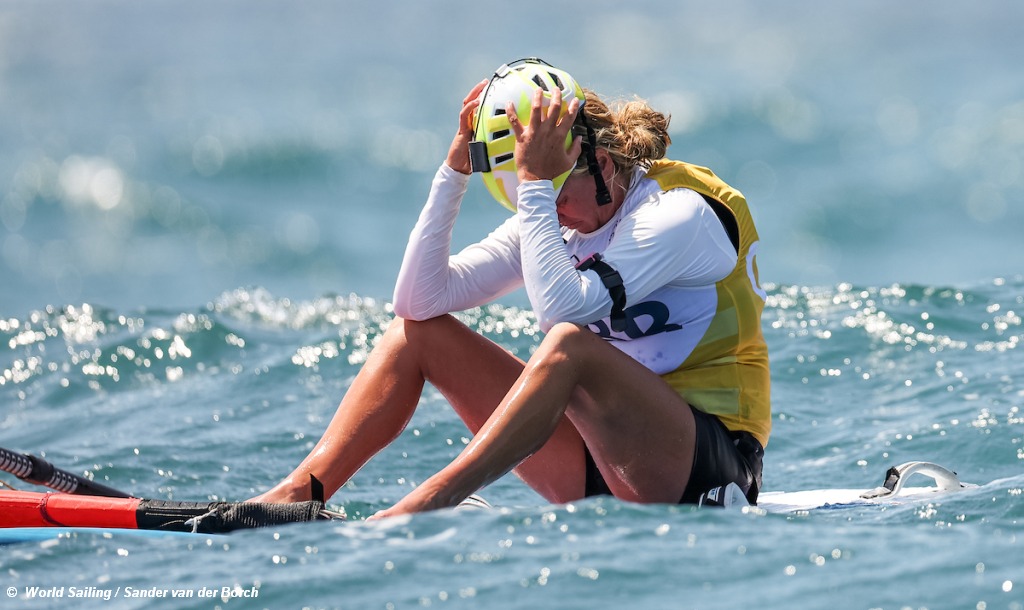
Taken to its limit, the choice is either stay in the Olympics with a ‘first across the line’ final medal race deciding the medal podium, or decide that such a change is too great a break with tradition and withdraw from future Games.
It would be a brave move to ignore the IOC requirement and not one World Sailing has been keen to face previously.
Such a withdraw would probably be the end of professional dinghy sailing as we know it, and require a dramatic reorganisation of World Sailing.
World Sailing receives around USD$15 million from the IOC after each Summer Olympics. In the UK the RYA receives £23 million to pay and support the British Sailing Team. Both those payments would cease without Olympic involvement.
The Olympics are a unique event and Olympic medals carry a unique kudos that continues throughout the winners lifetime. If the competitors know the rules before they set out on the journey, where is the problem?
It is perhaps worth noting the remarks of Juan Antonio Samaranch, Vice-President of the International Olympic Committee.
Samaranch acknowledged that while sports such as athletics, gymnastics and swimming take centre stage during the Games, possible changes are being considered. “The programme is constantly changing and evolving. From June this year, we will announce how the current programme will be assessed and how it will develop in the future.”
World Sailing has declared that the final race scoring format for the Olympic Sailing competition will be determined no later than 31 May 2026.
Related Post . . .
World Sailing to debate Olympic Sailing new medal race formats for LA28
World Sailing looking at proposals for Olympic Keelboats, Foiling dinghies and Wing Foils