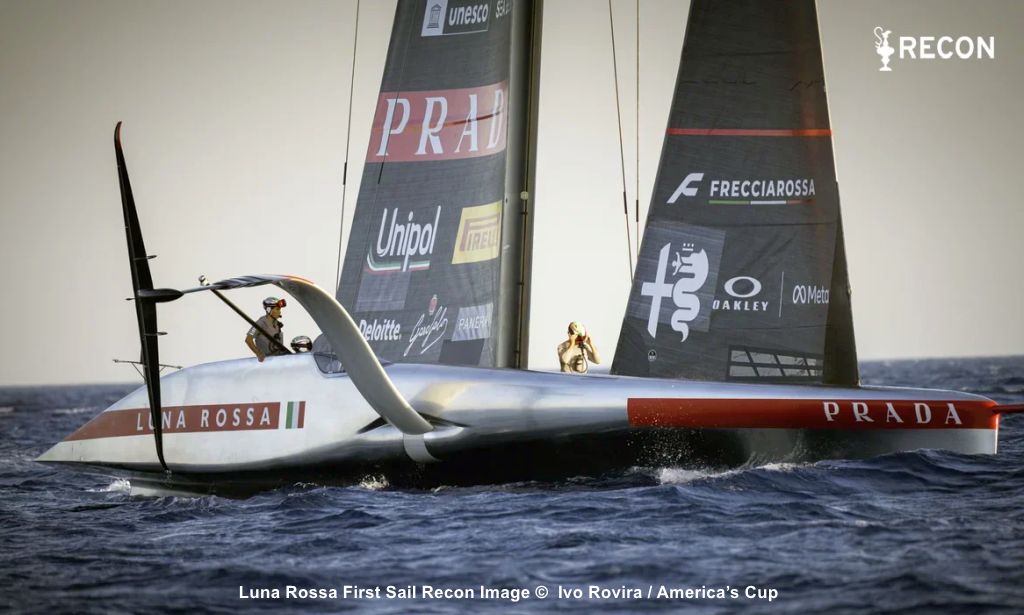
The Italian Luna Rossa team who dominated the AC40 Preliminary Regatta in Sardinia just a few weeks’ ago, launched late in the Cagliari sunset with the boat known as the ‘Silver Bullet’
Peter Burling and Ruggero Tita were the nominated helms and quite rightly took their time to bed into a whole new way of working onboard the AC75 which is a considerable step-up from the one-design AC40s.
It was a full crew onboard with Burling and Tita joined by trimmers Umberto Molineris and Vittorio Bissaro with Maria Giubilei in the 5th person pod (to port) and Marco Gradoni in the starboard pod, making a total of six-up through the session.
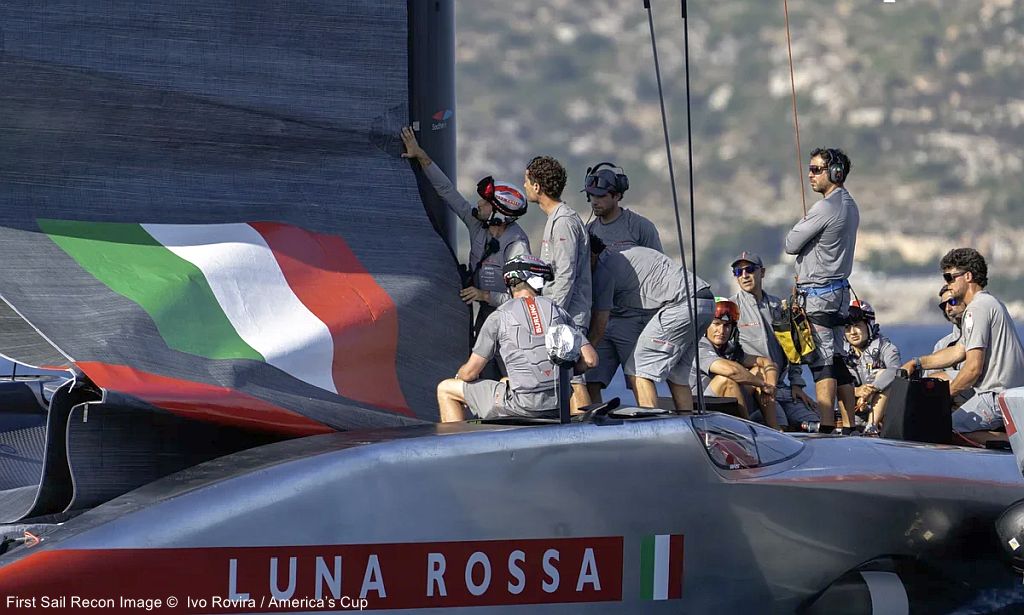
Once rigged, the boat was craned into the water at 17:00 and the team rushed through the remaining procedures. No cant tests were observed at the dock, suggesting the team had tested the FCS beforehand, possibly explained by the modified ‘dome’ boat tend.
As the team exited the harbour, the sea breeze died completely. Cameras on the starboard wing were turned on, LiDar poles were installed, and the boat was towed offshore toward Sella del Diavolo.
Sail designers had boarded the chase boats, focusing on the new mainsail, which was hoisted at 18:00.
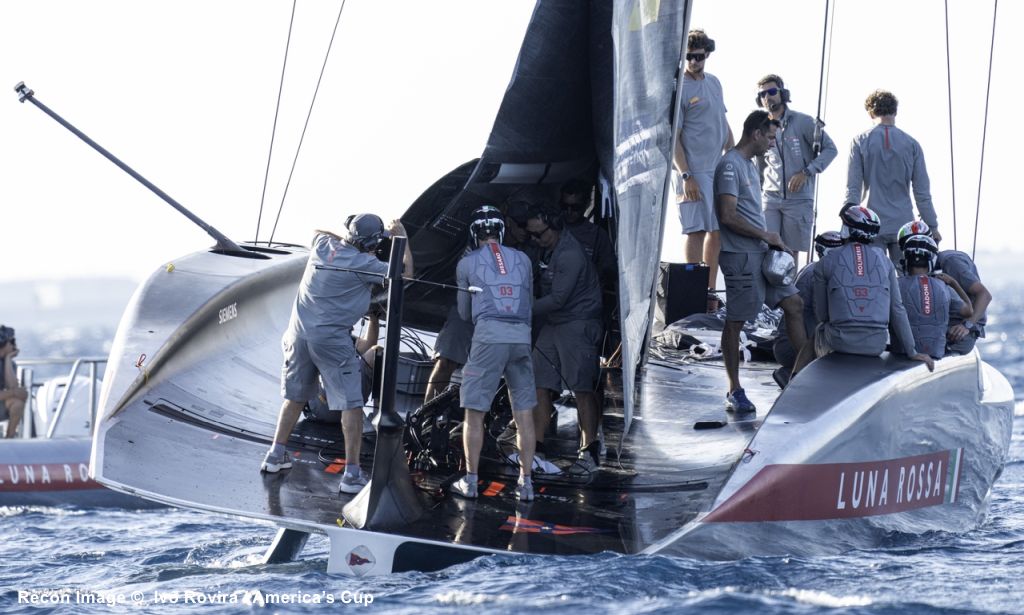
When installing the mainsheet system, a broken component delayed the team. Personnel returned to base to retrieve a spare, although it remains unclear which item had failed. Footage was taken inside the mainsail skins from aft while the sheeting system was being rigged.
The offshore Maestrale had filled in from 330° at 14–16 knots when the J4-5 was passed onboard and hoisted. Around 19:00, the team began accelerating on two boards.
During the first upwind starboard tack, the boat appeared quite unstable in both pitch and ride height, with the windward board piercing heavily. A conservative two-board bear-away followed, leading to the team’s first one-board straight-line downwind run at approximately 40–42 knots.
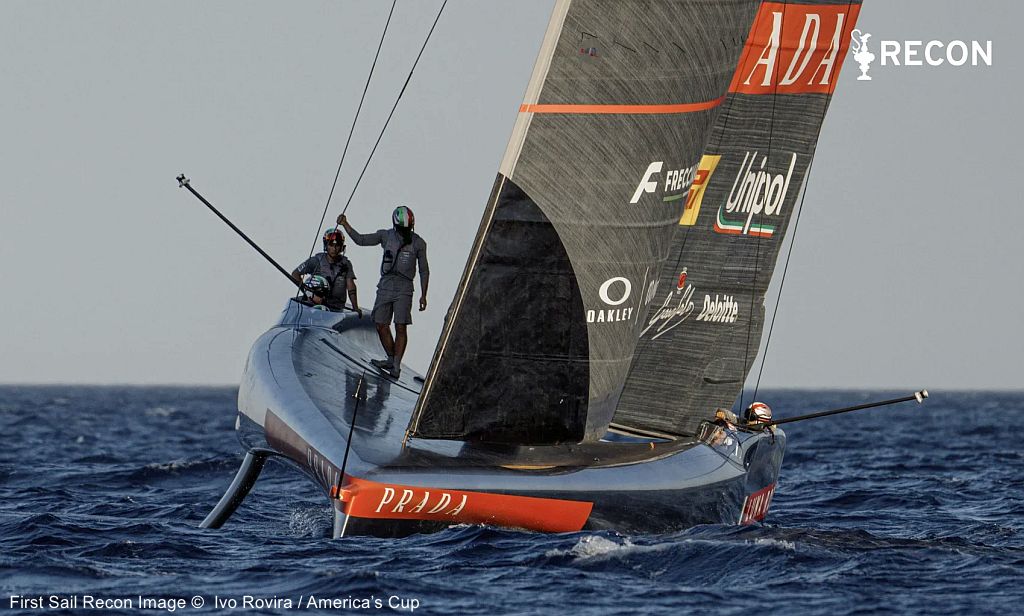
The first and only gybe of the day appeared slow but steady, with an extended period on two boards, leading to a two-board round-up and a stop after 14 minutes foil borne. The breeze had increased and chop had built somewhat given the offshore location.
A lengthy inspection followed over the next 20 minutes, involving personnel working below deck.
The second session began with another self-take-off on two boards on starboard tack. During the following 12 minutes, the boat sailed a long straight-line upwind leg on two boards, alternating between high-and-slow and VMG modes, suggesting foil testing given the mounted cameras.
Once again, the boat appeared to lack pitch and height stability hitting the chop.
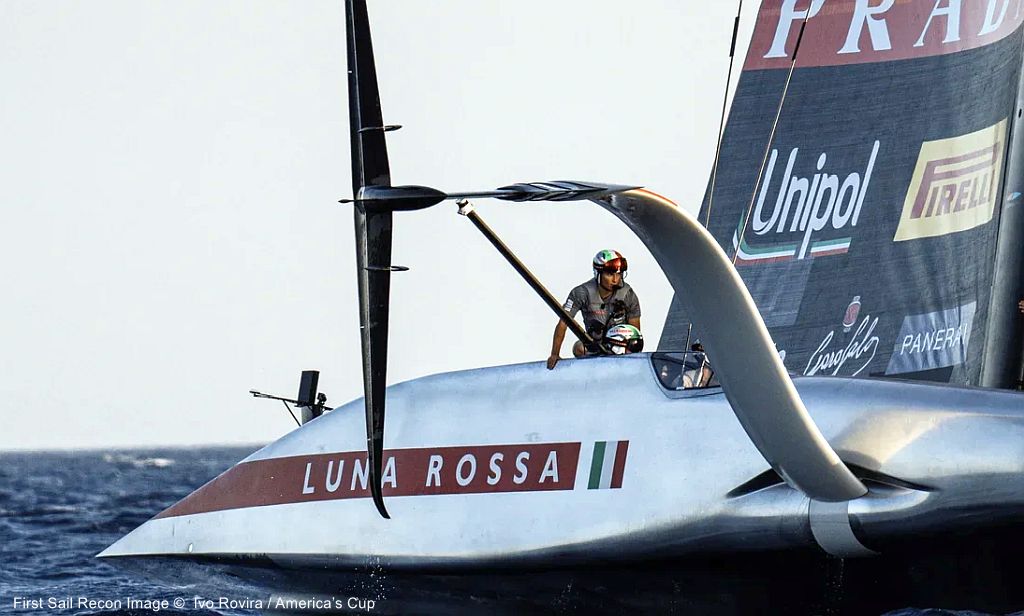
At 20:05, the team stopped and the jib was dropped, followed by the mainsail.
Overall, it was a productive day for the team, with sailing scheduled to resume on Friday the 12 June.
The speed was certainly there, as they hit an estimated 40-42 knots on the first real run, and the team will certainly have come away with optimism around the work that has been completed to adapt to the new rules.
Via RECON REPORT – 10 JUNE 2026