Olympic sport has moved towards more ‘sudden death’, more final-day jeopardy. “It’s what the audience wants,” or so we’re told.
Although I have not seen where this question was asked and what the answer was. But World Sailing committees have decided that to stay in the Olympics a ‘sudden death’, more final-day jeopardy, scoring system is required . . . so here we are.
Basically this only effects the professional sailors competing in the Olympic classes, so the 330 sailing competitors who gather once every 4 years to take part in that very rare event, a major televised dinghy sailing event.
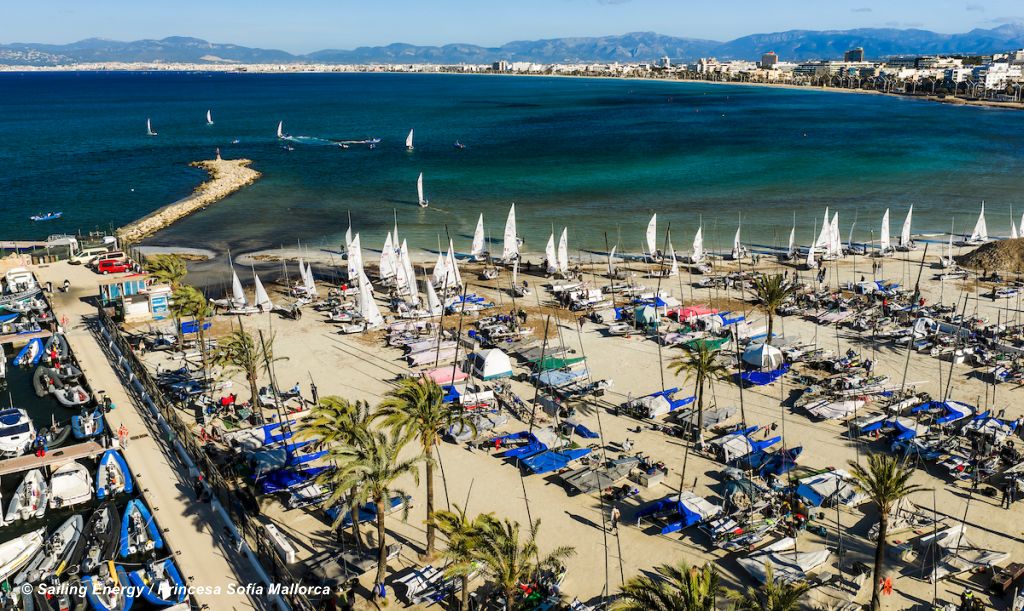
The new format has been tested a number of times at smaller regattas in the past few months, but the 2026 Trofeo Princesa Sofía Mallorca by FERGUS Hotels is the biggest yet.
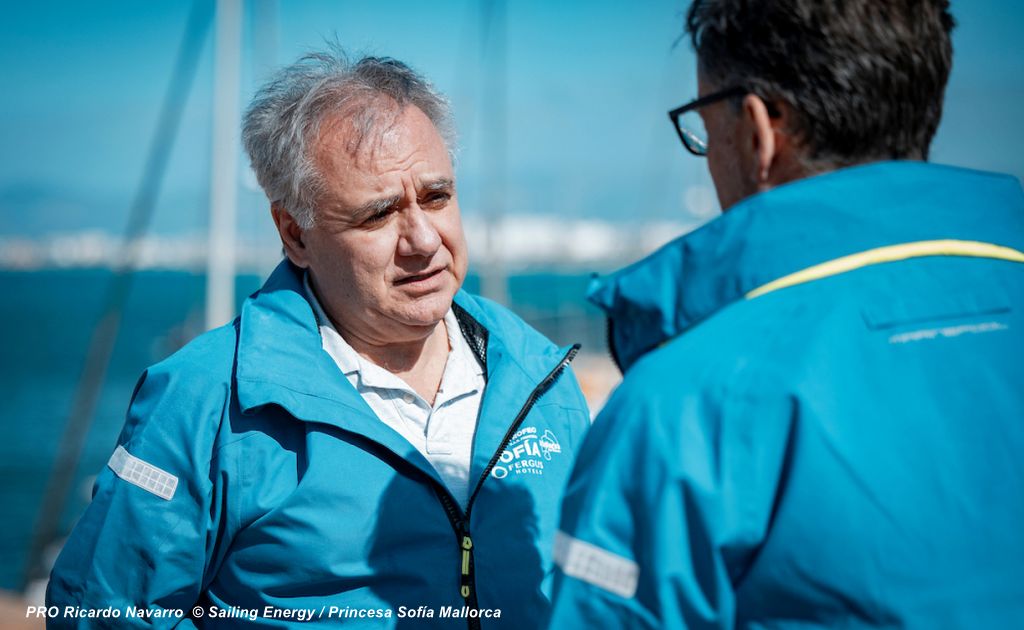
Tasked with managing this grand experiment is Ricardo Navarro, the principal race officer of the event.
“The format is trying to achieve two points,” Navarro explains. “The first one was keeping the technical side of the sport for competitors, and also to make our sport more attractive for our fans: easy to understand and more dynamic. I would say it is a new era for the sport.”
There are three different formats in play, with the iQFOiL windsurfers and the Formula Kite boards already experienced with trialling different forms of racing.
It’s the boat classes that have tended to stay in their lane, doggedly keeping with the old ‘medal race’ format. With traditional sailing competition, every race counts equally from day one. Now there’s a much higher weighting towards the end of the week.
It’s a move away from low-points aggregate scoring, where every race carries equal weighting.
As British ILCA 6 sailor Daisy Collingridge explains: “We did four races in the first two days, but now we’re carrying our finishing position on the scoreboard through to the next round. So whoever is first carries through 1 point to the next round, and so on.”
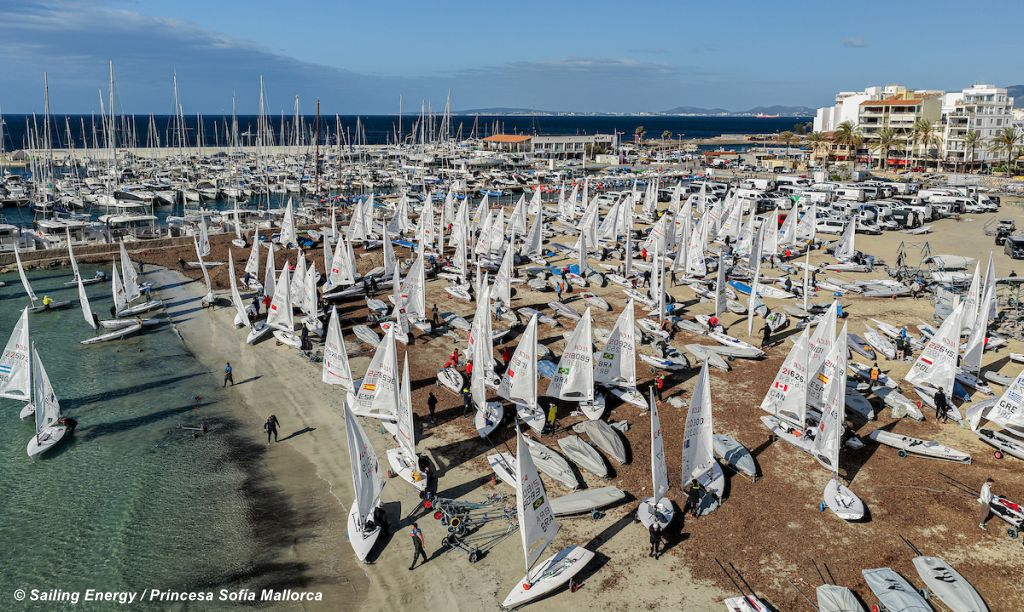
In the case of the ILCA 6 fleet, with 143 competitors at the start of the week, only the 50 that have qualified for the next round – Gold Fleet – are still in the fight for the medals. Now the battle is to make it into the top 10 for the final day’s racing. So far not so different from the past 20 years of Olympic competition.
For Daisy she swapped her 8th place with 20 pts after four Qualification races for a carry forward score of 8 pts. She then finished 8th in the first race of the Elimination series giving her 16pts and placing her 4th overall. Her aim is to stay in the top ten to make the Medal racing.
Keeping the Gold in Play
The most dramatic shift involves the points structure of the finals. Rather than the single-heat ‘medal race’, now the new structure is the ‘Two-Race Final’ for the top 10 ranked boats from Gold Fleet.
In previous iterations, it was often mathematically impossible for lower-ranked sailors in the top 10 to reach the podium on the final day. That has now changed. “There is a change in the number of points that will make it possible for any sailor that goes to the final to get a medal,” Navarro says. “In the past, it was not possible for all 10 boats. Now, all 10 boats fight for medals.”
The new system removes the possibility of a leader clinching the gold medal before the final day is even contested. All 10 boats in the final have a theoretical shot at the gold – although the further down the order the less likely a sailor will reach the podium.
Navarro believes keeping the medals open for all of the top 10 is vital for the sporting narrative. “With the previous format, a competitor could go to the finals and, even with a bad result, that competitor could get the gold. This is not the best message for any sport. Now, all competitors must perform at the finals because nothing will be decided before the final day.”
Evolution and IOC Perception
While the format is still being refined – with a final confirmation of the new format expected by the end of the year – Navarro is confident that the changes have the backing of the athletes. “The sailors participated in the discussions. Everybody understood that change was necessary. Perhaps you need to adjust a little bit, but I hope that everybody has understood and we will have a better scenario.”
Ultimately, these changes are about more than just points; they are about the survival and growth of sailing on the world stage. As the International Olympic Committee (IOC) looks for sports that provide ‘final day excitement’, sailing is evolving to meet that standard.
“It’s critical for our sport at this moment to show, not only to the IOC but to our fans, that we are always going better and better,” Navarro concludes. “Sailing is in constant development. I think the IOC has understood that this is a good move, and everybody expects it will be a success at the next Games.”