As we enter 2026 a key decision for the America’s Cup team designers is to decide how the latest AC75 Class Rule modifications can be incorporated within the existing yachts and what improvements can be legally made.
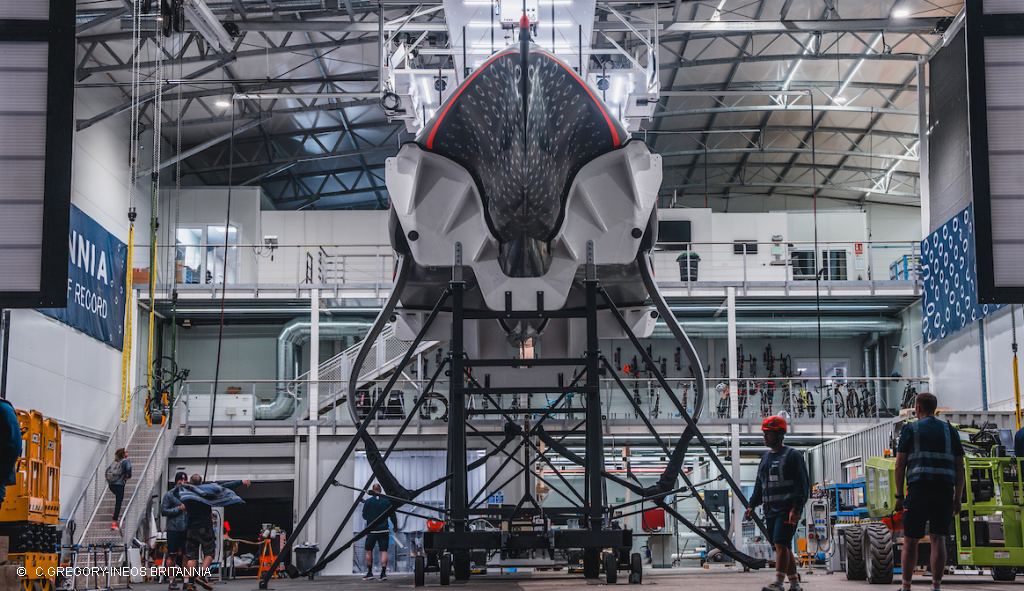
The third edition of the AC75 Class Rule and Technical Regulations, dated 9 September, was a major game-changer with the introduction of re-use of legacy hulls from AC36 and AC37, with additional tolerance for the adaption of the older AC36 hulls.
That decision was based on analyses of all of the hull shapes used in Barcelona at AC37 by a collective between Defender and Challenger of Record, which concluded that the speed differences just of the hulls were minimal. With all of the gains in the foils and systems; it therefore made absolute sense to concentrate design time into those areas of development and re-use the hulls.
Not building new hulls is also a large cost saving for the teams, and should help with the compressed time frame to race in the summer of 2027.
All five teams entered to date have AC37 hulls available (some damaged) which will require hull structure to be modified to accept the new Battery packs and deck layouts for the reduced crew numbers, plus guest cockpit.
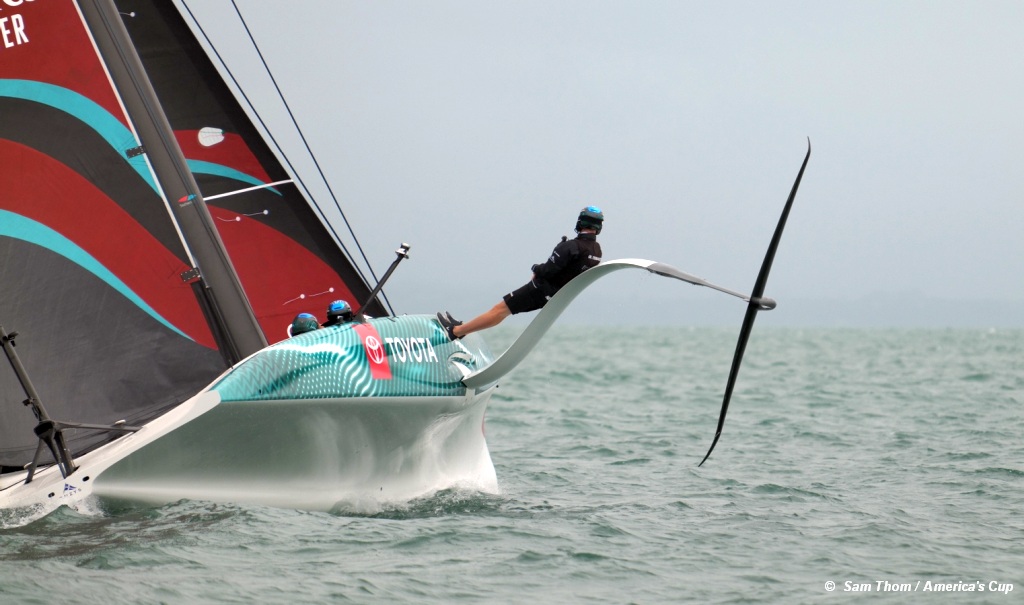
While the hulls will require considerable reconstruction, main development work is expected in the foil/wing area, with three new foil wings, and five new foil flaps allowed in addition to adjustments to some legacy foils and wings.
Athena Pathway’s Nick Holroyd, commented: “Another big change will come in the electronic management systems, now that cyclors have been outlawed, but result will be even closer racing and a sustainable event overall.”
So where are the performance gains to be found within the Class Rule?
Dan Bernasconi, Head of Design for Emirates Team New Zealand and one of the architects of the third edition of the AC75 Class Rule explained:
“The racing will definitely be closer in AC38, now in the third generation of this class. The level will be higher and the systems will be more mature. Everyone feels they can still get a lot more out of the boats.”
“There is still a really long way to go in terms of performance gain for teams, making the sails work well across the range, optimising the shape, structure and the hydraulic systems that are used to control them.”
“Also with the foils, there is always that 50 knot barrier which we saw smashed a number of times in Barcelona. It’s the cavitation limit which we are always talking about how you get through that. We know how to design foils that can exceed 50 knots, but it’s harder to translate that to something that can also sail a windward leeward course efficiently.”
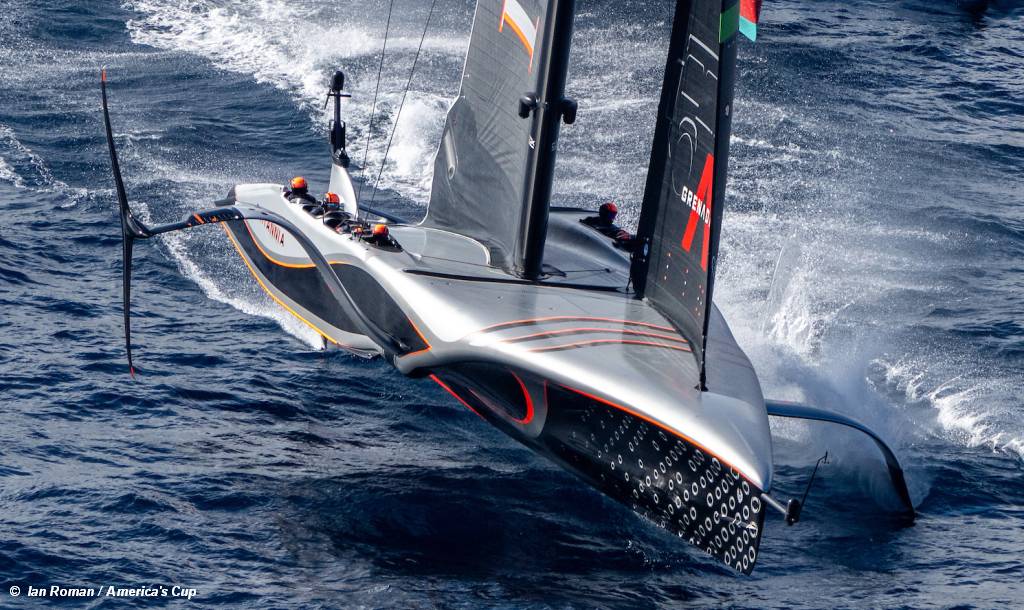
In terms of the racing itself, the dynamics are expected to change.
With a stronger average wind in Naples than Barcelona, the racing promises to be more competitive than ever.
“Teams are looking forward to fleet racing, and maybe switching up the match racing a bit, so it is going to be a pretty cool event for all of the spectators on land, on boats or watching the global TV broadcast.”
As the teams prepare for the challenges ahead, Bernasconi is excited for the potential of the designs and upcoming races.
“This is the third edition of the AC75 Class Rule, but there are always exciting developments.”
“The teams have the absolute best design and engineering minds available, optimising their yachts within the constraints of the Class Rule as best as they can – and that is why the America’s Cup is the pinnacle of innovation in our sport.”
“There’s still so much more to come from the AC75.” said Bernasconi emphasising the commitment to continuous improvement and innovation in the sport.
The actual AC38 programme will be announced by the new America’s Cup Partnership on 21 January 2026 in Naples, with dates of the America’s Cup Match revealed.
It will be an interesting time when the AC75’s emerge from the sheds once again in their new clothes.
AC38 Entries as of 24Dec 2025
- Emirates Team New Zealand (NZL)
- Athena Racing (GBR)
- Luna Rossa (ITA)
- Tudor Team Alinghi (SUI)
- K-Challenge (FRA)